Denver Yoga Summit 2026: What I Took Home From the Room
Coach Nick Venuti recaps teaching at the Denver Yoga Summit this September: what landed, one movement takeaway, and why he keeps showing up to these rooms.
The short answer
I taught two sessions at the Denver Yoga Summit this September: "Deconstructing the Desk Body" and a workshop on the SI joint. The room was full of teachers, studio instructors, and movers who share one goal: using movement, yoga, breath, and their own bodies to expand what is possible. Here is what landed, and one practical takeaway you can use this week.
In April, I taught at the Sedona Yoga Festival. In September, I took the same intention to Denver.
The Denver Yoga Summit gathers yoga teachers, studio instructors, and serious practitioners for a weekend of classes, workshops, and the kind of hallway conversations that change how you teach. This was the first year, and it was one of the most well-run festivals I have been to. Everything was organized, the staff was responsive, and the venue itself was beautiful. It is probably one of the most beautiful places I have been able to teach.
I was there to teach two sessions. The first was "Deconstructing the Desk Body," for everyone working long hours at a desk. We went through the three things happening to those bodies right now: rounded shoulders, a weak core, and weak glutes. The second was a workshop on the SI joint, focused on internal rotation of the hip.
Why do you teach at events like this?
Because of the room.
My line on this has not changed since Sedona: it is never about the stage. It is always about the room.
A stage is one person talking. A room is fifty people breathing in the same rhythm, working the same pattern, having their own private breakthroughs three feet apart from each other. You cannot manufacture that online. You have to show up for it.
I keep accepting these invitations because the rooms keep me honest. When you teach a movement concept to a room full of teachers, there is nowhere to hide. The cueing has to be clean. The progressions have to work on real bodies, not ideal ones. Every room makes the coaching sharper.
What landed hardest in Denver?
In the desk body session, the thread that kept coming up was adaptation. Your body starts to adapt to those shapes. Rounded shoulders, weak core, weak glutes stop being temporary postures and become the body's default setting. Then you go do something different, and the body breaks down. Not because the new activity was dangerous. Because the compensation finally ran out of room. I taught poses that deconstruct the desk body by turning the dormant muscles back on, in order, before anything gets loaded.
The SI joint workshop landed on a detail most yoga practitioners have never been told. In most standing poses, we spend far more time in external rotation than internal. That imbalance can show up as SI joint pain, or as a spine that is overly mobile and not strong enough. What I noticed in that room: most of the people lacked strength in internal rotation. Not flexibility. Strength. Keep in mind the SI joint is built to stabilize the sacrum to the ilium far more than it is built to move. I have a post on my Instagram that goes deeper on this if you want the full breakdown.
What I will say generally: the people who come to these summits are not beginners. They are teachers and long-time practitioners. And the thing that still surprises them, every time, is how much changes when you stop chasing the stretch and start chasing the recruitment. Activation before load. It is the least glamorous principle I teach and the one that gets the most nods in the room.
One takeaway you can use this week
You did not need to be in Denver for this part.
Pick one movement you do regularly. A squat, a lunge, a step-up. Before you do it, ask one question: do I feel the right muscle working, or is something else doing the job?
If your quads do all the work on a step-up, your glutes are likely offline. If your lower back tightens on a deadlift pattern, your glutes are likely offline. The fix is five minutes of slow activation work for the muscle that went quiet, then the movement again.
That is the whole principle in one drill. Screen, activate, then load. It works in a Denver workshop room and it works in your living room.
The room
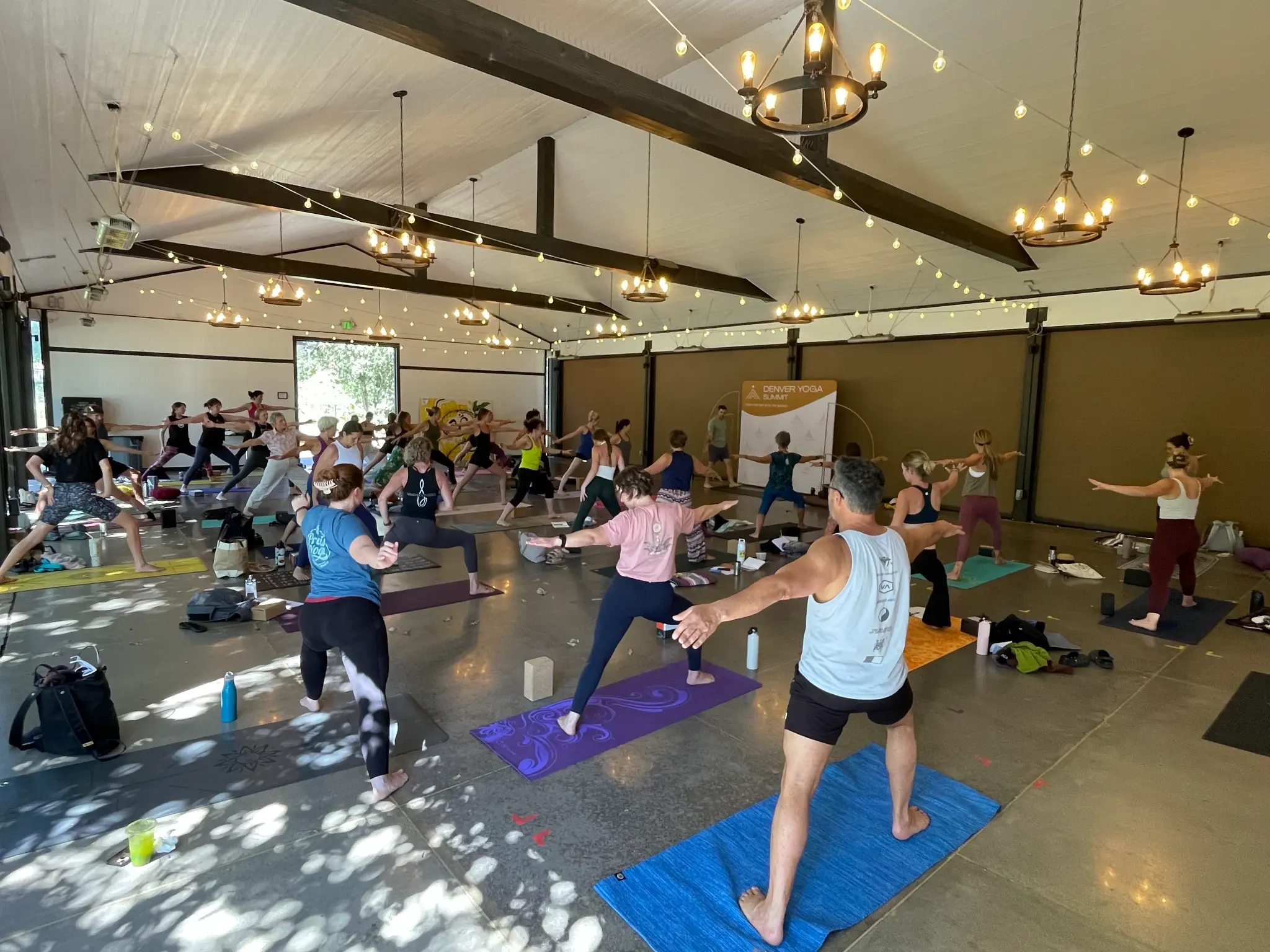
Movement work in the room at the Denver Yoga Summit.
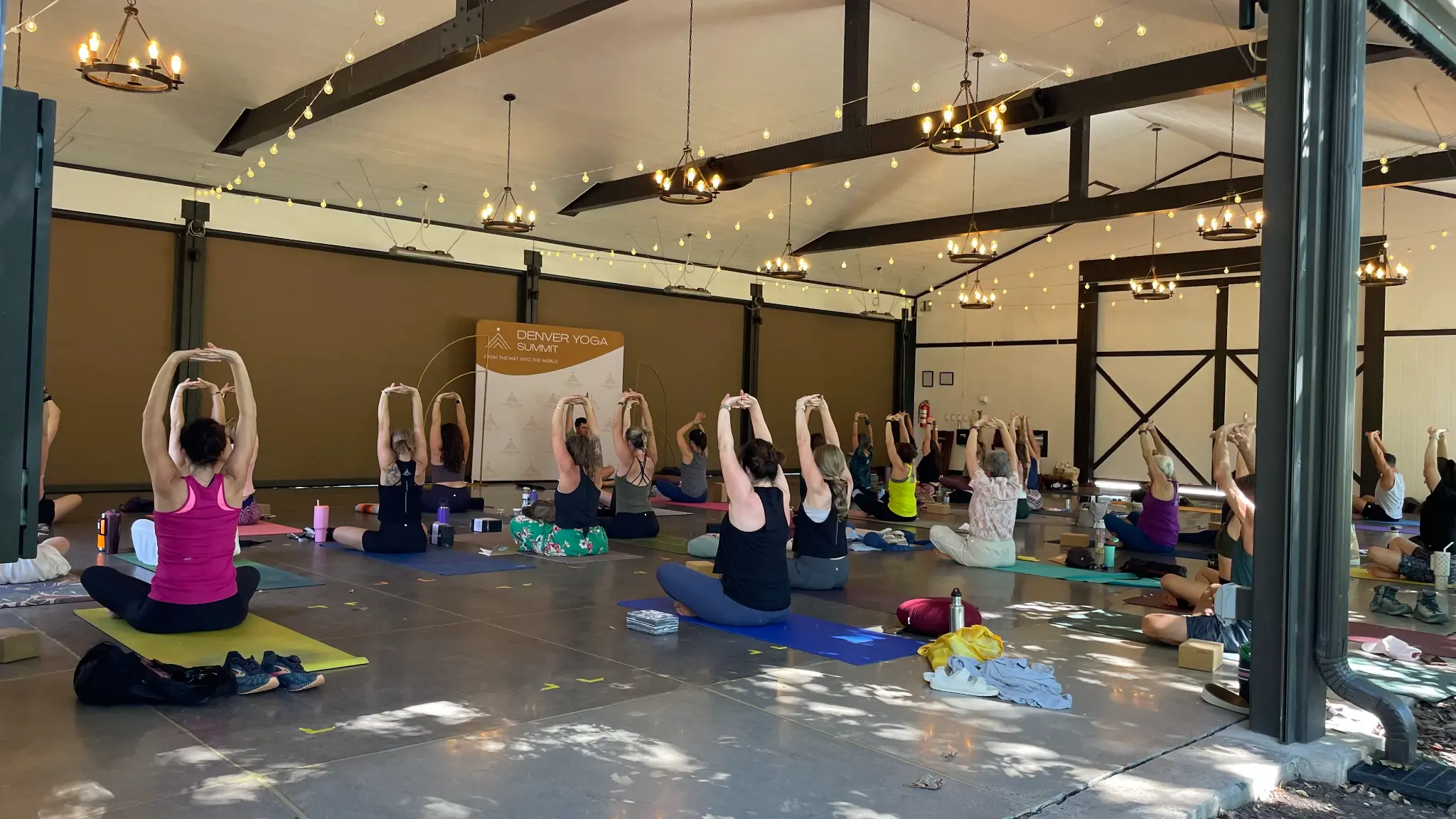
Teachers teaching teachers is where the work gets tested.
Frequently asked questions
What is the Denver Yoga Summit? A weekend gathering of yoga teachers, studio instructors, and dedicated practitioners in Denver, Colorado, with classes and workshops across styles and lineages. The 2026 edition ran this September.
Do you teach at yoga festivals regularly? When the room is right. Sedona in April, Denver in September. I choose rooms where the audience wants depth, not a workout. Teachers teaching teachers is where the work gets tested.
Can I train with you if I was not there? Yes. I teach free community yoga every Sunday, live on my Instagram page, 10am and 7pm ET. There is no link and no sign-up. Just show up on @thehealthyyinzer. Every Saturday I put a vote in stories so you can weigh in on the class. Pay attention.
Do you offer this kind of workshop for private groups or studios? Yes. I am booking private workshops for studios and groups. Reach out through the work with me page and tell me what you are looking for.
Where to go from here
Denver is done. The work continues on Sundays.
Join the free community class this Sunday on Instagram Live, 10am or 7pm ET. No sign-up, no fee. Bring the one movement pattern you are unsure about and test the screen-activate-load principle yourself.
And if you want a full assessment of where your own chain is breaking down, take the free two-minute quiz. Find your starting point. Then we build from there.